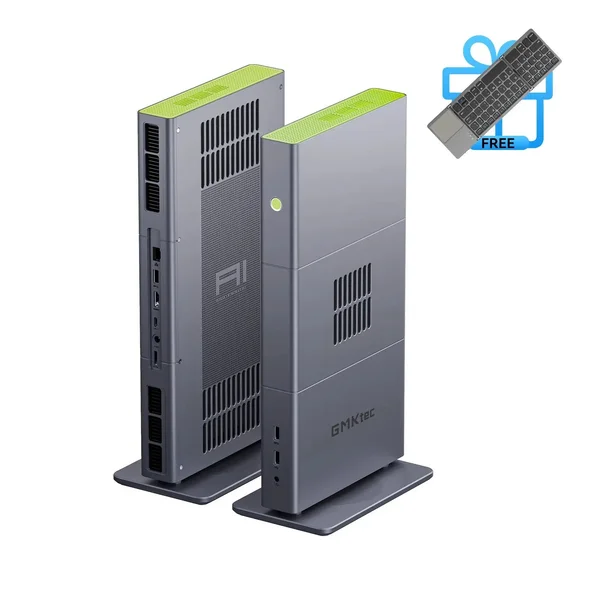


GMKtec EVO-X3

GMKtecMini PC reference

GMKtec EVO-X3

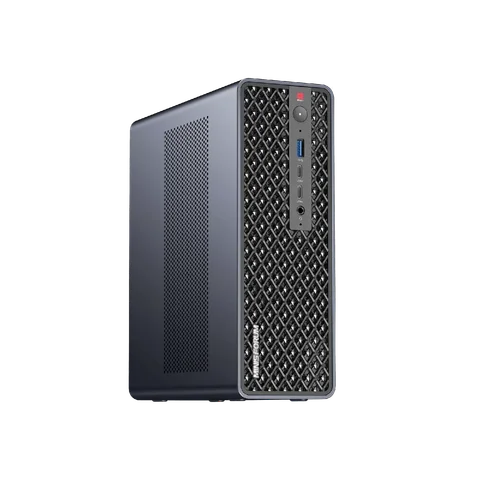
GMKtec EVO-X3 is a compact option for development, content work and local AI experiments using AMD Ryzen AI Max+ 395 and integrated Radeon 8060S graphics. Software support and the memory required by a particular model matter more than theoretical AI ratings. Memory is fixed at purchase, so choose RAM capacity for the full intended lifespan. OCuLink allows a separate compatible external GPU dock; connect or disconnect it only with the PC powered off.

Processor
AMD Ryzen AI Max+ 395
Graphics
Radeon 8060S
Memory
128 GB
Storage
2 TB
Configuration being compared128 GB RAM · 2 TB SSDNew
US stores · USD

Prices across stores

MiniPC.guru compares retailer listings. Purchases are completed on the retailer’s website.

View price history
RetailerAvailabilityListed priceLast checkedRetailer website
In stock$3,799.99Lowest checkedView at GMKtec
In stock$3,949.99Sold by GMKtec-DirectView at Amazon

Availability reflects the latest store check. Shipping, tax, coupons and checkout totals are not included; confirm them at the store.

Specifications

Processor, graphics and installed memory/storage describe the selected configuration. Expansion limits and connectivity describe the model; optional hardware is identified separately. References are collected in About this data below.

Processor
AMD Ryzen AI Max+ 395
Graphics
Radeon 8060S
Memory
128 GB
Storage
2 TB
Ports & displays
1 × USB-A 3.2 Gen1 (5Gbps); 1 × USB-A 2.0 (480Mbps); 1 × 3.5mm Audio Combo Jack; 1 × Power Button with White LED; 1 × HDMI 2.1 (8K@60Hz); 1 × OCuLink (PCIe Gen4 ×4); 1 × USB-A 3.2 Gen2 (10Gbps); 1 × USB4 Type-C (40Gbps / Video Output); 1 × 2.5G RJ45 LAN (RTL8125BG); 1 × DC IN (Ø5.5 × 2.5mm)
Ethernet, Wi-Fi & Bluetooth
Wi-Fi 7 (RZ717 / MT7925); Up to 2.9Gbps; Ethernet; 1 × 2.5G RJ45 LAN (RTL8125BG); Bluetooth 5.4
RAM & storage upgrades
Onboard LPDDR5X 8000MT/s (Non-upgradeable); 128GB Standard Configuration Dual M.2 2280 PCIe 4.0 ×4 Slots; Maximum Total Storage: 16TB (8TB ×2)
Power supply & power limits
Power supply / DC input rating: DC IN 19.5V / 11.8A. This is a supply rating, not measured wall-power consumption.
Dimensions & weight
353 × 186 × 41mm without stand; approximately 2.3kg. Dimensions use manufacturer order; axes are not labeled.

Video

Plays on YouTube. Nothing is loaded from YouTube until you press play. YouTube

What owners say

The hardware convinces everyone who has used it and the software convinces nobody. A reviewer running the environment that ships on the machine found that its bundled model manager detected the neural processor and then reported that this machine's own processor was not supported by its runtime manifests; installing a different runtime by hand pushed that processor to full utilisation. The owner who has documented this machine most closely, across a long series of posts and a public provisioning repository, arrives at the same place from Linux and adds a warning that contradicts the marketing directly: do not accept the advertised 96 GB of graphics memory as a fixed split, because a model targeting about 97 GB will not fit alongside a host left with 32, and the system will kill both processes. His recipe is a minimal fixed allocation with a large dynamic pool instead. He also found that a build compiled without HIP graphs generated tokens 26 per cent slower, which is a compile option and not a version. The rest is plain: soldered memory, two M.2 slots, an external 230 W adapter, and a single 2.5-gigabit network port that is hard to defend at this price. Nobody has published a noise measurement for this machine.

For whom
Running local models on Linux, for someone willing to build the software stack themselves and pin the versions.
Not for
Anyone expecting the preinstalled AI environment to work as sold, and anyone who needs more than a single 2.5-gigabit network port.

Our own summary of 5 published sources, reviewed Sep 17, 2026. We have not tested this Mini PC ourselves; the sources are listed under About this data.

Performance

3 sourced resultstok/s

Same model, quantization, context length, prompt, output length, runtime version and batch size. Record time to first token separately.

Externally reported measurements. MiniPC.guru has not independently reproduced these tests.

14.1 tok/sCommunity benchmark

Strix Halo LLM upgrades: what got faster and what failed

By Darren Soothill · Soot / Silicon

Source published
Aug 11, 2026
Test performed
Aug 11, 2026
Added to MiniPC.guru
Sep 17, 2026
Source reviewed
Sep 17, 2026
Tested hardware
AMD Ryzen AI Max+ 395 · Radeon 8060S, gfx1151 · 128 GB unified memory · not applicable: token generation does not read from disk once the model is resident. The measured unit carried the 4 TB drive; the figure is shown here because the protocol does not use the disk, not because a 2 TB unit was tested
Software / version / OS
llama.cpp, ROCm backend, built with GGML_HIP_GRAPHS=ON and run with HIP_LAUNCH_BLOCKING=1 · llama.cpp b10362, commit 4801e3c567d5; ROCm 7.14.60850 · Ubuntu 24.04.4, kernel 6.17.0-40
Power profile
not reported by source: the author documents elsewhere in the same series that the chassis power mode cannot be read from Linux
Test conditions
DeepSeek V4 Flash UD-IQ3_XXS, 97.05 GiB across four shards. Flags -ngl 99 -fa 1 -p 2048 -n 64 -r 1 -mmp 0. This is the shallow case, with no added context depth: 14.10 tok/s generated, 145.01 tok/s prefill. The same build compiled with HIP graphs disabled gave 10.35 tok/s, so the 26 per cent difference is a compile option rather than a version change

Editorial review checks the source and documentation; it does not certify the measurement or mean we tested the device ourselves.
10.77 tok/sCommunity benchmark

Strix Halo LLM upgrades: what got faster and what failed

By Darren Soothill · Soot / Silicon

Source published
Aug 11, 2026
Test performed
Aug 11, 2026
Added to MiniPC.guru
Sep 17, 2026
Source reviewed
Sep 17, 2026
Tested hardware
AMD Ryzen AI Max+ 395 · Radeon 8060S, gfx1151 · 128 GB unified memory · not applicable: token generation does not read from disk once the model is resident. The measured unit carried the 4 TB drive; the figure is shown here because the protocol does not use the disk, not because a 2 TB unit was tested
Software / version / OS
llama.cpp, ROCm backend, built with GGML_HIP_GRAPHS=ON and run with HIP_LAUNCH_BLOCKING=1 · llama.cpp b10362, commit 4801e3c567d5; ROCm 7.14.60850 · Ubuntu 24.04.4, kernel 6.17.0-40
Power profile
not reported by source: the author documents elsewhere in the same series that the chassis power mode cannot be read from Linux
Test conditions
DeepSeek V4 Flash UD-IQ3_XXS, 97.05 GiB across four shards. Flags -ngl 99 -fa 1 -p 2048 -n 64 -r 1 -mmp 0 plus -d 24576, the deep case: 10.77 tok/s generated, 88.38 tok/s prefill

Editorial review checks the source and documentation; it does not certify the measurement or mean we tested the device ourselves.
10.25 tok/sCommunity benchmark

Strix Halo LLM upgrades: what got faster and what failed

By Darren Soothill · Soot / Silicon

Source published
Aug 11, 2026
Test performed
Aug 11, 2026
Added to MiniPC.guru
Sep 17, 2026
Source reviewed
Sep 17, 2026
Tested hardware
AMD Ryzen AI Max+ 395 · Radeon 8060S, gfx1151 · 128 GB unified memory · not applicable: token generation does not read from disk once the model is resident. The measured unit carried the 4 TB drive; the figure is shown here because the protocol does not use the disk, not because a 2 TB unit was tested
Software / version / OS
vLLM serving the completions API · vLLM 0.27.0, commit 4bdc8a788d2e, wheel built locally for Python 3.12 against ROCm 7.14, SHA-256 020fac1682b2e500bbb327466d01a552fe12a3e750843ded5cd599155b0ced50 · Ubuntu 24.04.4, kernel 6.17.0-40
Power profile
not reported by source: the author documents elsewhere in the same series that the chassis power mode cannot be read from Linux
Test conditions
Qwen3.5-122B-A10B GPTQ Int4 snapshot on ROCm 7.14 with the tuned mixture-of-experts registers, a 4096-token server limit, two warm-up waves and ten measured waves, 64 output tokens and seed 12345. With one concurrent client: 10.25 completion tok/s, mean time to first token 1.115 ms, mean end-to-end 6.244 ms; all thirty measured requests completed

Editorial review checks the source and documentation; it does not certify the measurement or mean we tested the device ourselves.
Price history

GMKtec EVO-X3 · 128 GB RAM · 2 TB SSD

Loading checks…

New condition · US stores · USD · Selected configuration only. Prices exclude shipping and tax. Each price stays on the chart until that listing's next check, for at most 36 hours, the same window the store prices use. Out-of-stock, failed and missing checks leave gaps.

About this data7 references

Specs and any benchmark results come from the sources below. We haven't tested this Mini PC ourselves.

Sources

  1. GMKtec EVO-X3 — manufacturer specifications ↗
    • Manufacturer / specification source
    • Ports & displays · Reviewed Sep 12, 2026
    • Ethernet, Wi-Fi & Bluetooth · Reviewed Sep 12, 2026
    • RAM & storage upgrades · Reviewed Sep 12, 2026
    • Power supply & power limits · Reviewed Sep 12, 2026
    • Dimensions & weight · Reviewed Sep 12, 2026
  2. Selected configuration ↗
    • Selected configuration
  3. Strix Halo LLM upgrades: what got faster and what failed ↗
    • External benchmark · Reviewed Sep 17, 2026
    • Owner review source · Reviewed Sep 17, 2026
  4. GMKtec EVO-X3 mini PC review ↗
    • Owner review source · Reviewed Sep 17, 2026
  5. GMKtec EVO-X3: the hardware, BIOS and NVMe baseline ↗
    • Owner review source · Reviewed Sep 17, 2026
  6. evox3-llm-provisioner: firmware, memory and runtime notes for the EVO-X3 ↗
    • Owner review source · Reviewed Sep 17, 2026
  7. GMKtec EVO-X3 AI workstation: Lemonade, benchmarks and specs ↗
    • Owner review source · Reviewed Sep 17, 2026